The story of Thirubuvanam silk is a 1,000-year journey of royal patronage and migrant artistry. It is rooted in the Thanjavur district, where the craft has evolved from temple offerings to a world-renowned luxury textile.
The Chola Foundation
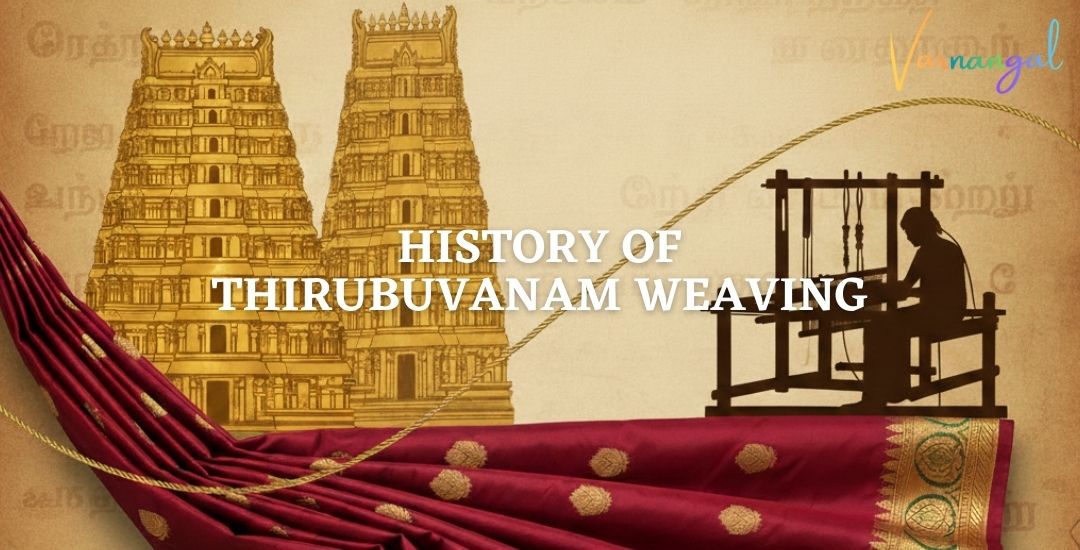
The town itself was established by the Chola dynasty, specifically named after King Kulothunga Chola III (also known as Thirubuvanam Chakravarti). During this era, weaving began as a dedicated service to the local Kampaheswarar Temple, where weavers created silk garments for deities and the royal household.
The Migration of the Sourashtras
The most significant turning point occurred between the 11th and 17th centuries. Skilled weavers from the Sourashtra community (originally from Gujarat) migrated south to escape invasions. After initially settling in Madurai, they were invited to Thirubuvanam by the Nayak and Maratha rulers (specifically Serfoji I) to establish a premier silk center.
Evolution of the Craft
While Kanchipuram became known for heavy, interlocked borders, Thirubuvanam developed a distinct identity by focusing on a seamless construction that prioritizes both structural strength and a radiant, glass-like finish. This unique evolution was driven by a need to create sarees that were not just beautiful, but also durable enough to be passed down as family heirlooms without the silk fraying at the joints. specialized art form that stands apart for its technical perfection and sophisticated elegance.
1. The Single Warp:
Unlike other styles, the body and border are woven on a single warp, creating a more cohesive and durable fabric.
2. Filature Silk:
The use of high-quality filature silk for both the vertical (warp) and horizontal (weft) threads gave the sarees their signature luster.
3. Royal Influence:
The Maratha kings encouraged the use of pure gold zari, turning the saree into a portable form of wealth.
Modern Recognition
In 1955, the THICO (Thirubuvanam Silk Handloom Weavers Co-operative) was formed to protect weavers from exploitation. The craft reached a historical milestone in 2019 when it was officially granted the Geographical Indication (GI) tag, legally cementing its status as a unique heritage product of Tamil Nadu.
Conclusion
The history of Thirubuvanam weaving is a testament to the blend of royal history and the incredible skill of migrant weavers. From its humble beginnings in temple service to receiving the prestigious GI tag, this craft remains a vital part of South India’s cultural and textile heritage.